
SUSTAIN: standing up multi-hazard early warning in South Sudan
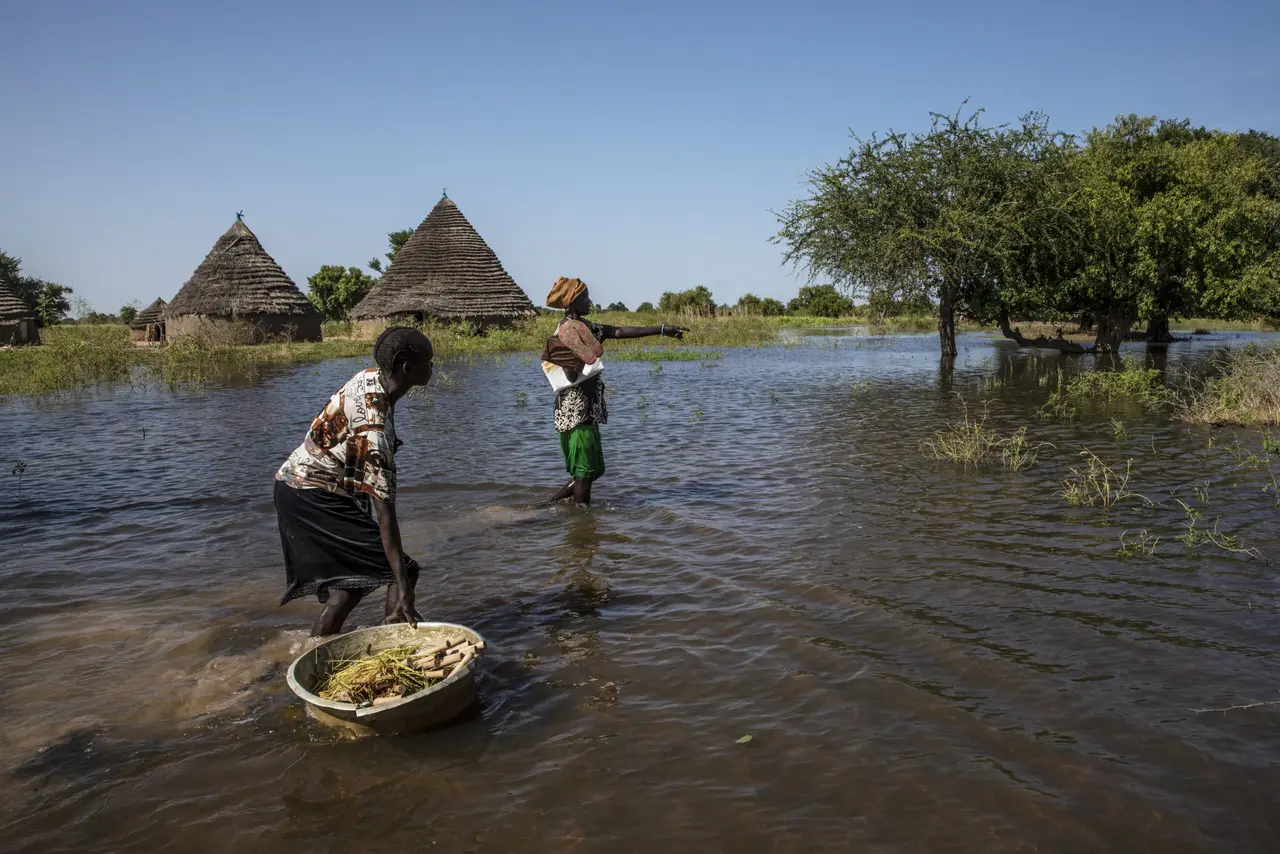
Strengthening Capacity of Government and Communities in South Sudan to Adapt to Climate Change — SUSTAIN — addresses a gap that sits upstream of every warning: the country lacks adequate capacity to monitor, predict and communicate climate information. The project rebuilds that chain end to end.
12 June 2026
6 min read
South Sudan
Ongoing · five-year programme
5
Year programme
3
Programme components
2023
Launched with UNDP
The capacity gap
South Sudan’s communities and productive sectors face climate impacts at a scale the country’s institutions were never resourced to track. Without dense observation, quality-controlled data and a working dissemination channel, a hazard is only recognised once it has already arrived.
SUSTAIN, implemented by ICPAC with UNDP South Sudan and the Ministry of Environment and Forestry, treats that as an infrastructure problem as much as a knowledge one.
Component one: the early warning backbone
The first component establishes the infrastructure and mechanisms for an effective and robust early warning system.
Installation of automatic weather stations and hydrometeorological equipment
Data management systems and quality-controlled climate data processing
Geospatial mapping and forecasting support
Revival of the Multi-Hazard Early Warning Technical Working Group
The four workstreams
Beneath the components, the work resolves into four practical streams that run in parallel.
Data generation and climate monitoring — automating acquisition through hydrometeorological stations
Early warning systems — Earth observation platforms for hazard detection and response planning, plus baseline assessments and Standard Operating Procedures
Capacity building — technical training guided by baseline surveys that identify the priority gaps
National Climate Outlook Forums — engagement through the Early Warning Technical Working Group and the Husika mobile application
A whole-of-government coalition
Delivery runs across the ministries that would each have to act on a warning: Environment and Forestry, Agriculture and Food Security, Water Resources and Irrigation, Humanitarian Affairs and Disaster Management, Health, Livestock, Energy, Transport and Roads — alongside the South Sudan Meteorological Service, the University of Juba and conservation partners.
Coordination of that breadth is the point. A multi-hazard warning is worth issuing only if the institutions that must respond to it are already reading from the same forecast.
Where Husika fits
Husika is named in the programme as a channel through which national climate outlooks reach people. Once stations report, data is quality-controlled and a forecast is agreed, the platform carries the resulting advisory to communities over SMS, voice, mobile and the web — and carries feedback back to the institutions that issued it.
Source
ICPAC — Our ProjectsAt a glance
South Sudan
Ongoing · five-year programme
ICPAC
UNDP South Sudan
Ministry of Environment and Forestry
South Sudan Meteorological Service
University of Juba
More case studies
Capacity building
23 September 2026
4 min read
Juba, South Sudan
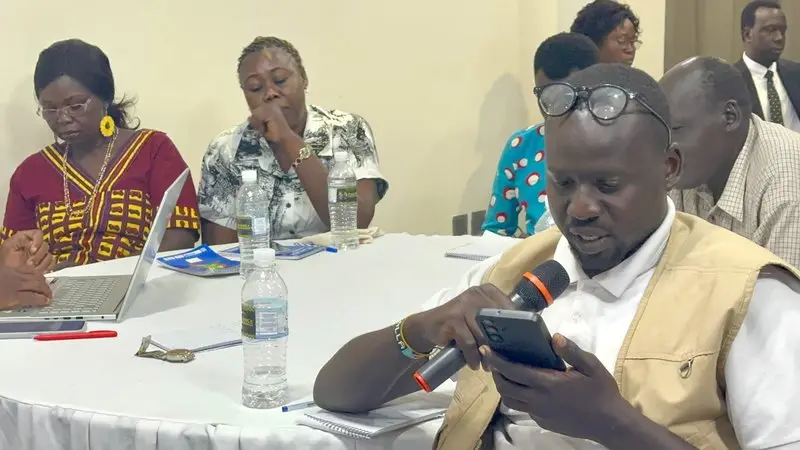
Training South Sudan’s journalists to carry climate information to the public
In Juba, ICPAC, WFP, the South Sudan Ministry of Humanitarian Affairs and Disaster Management and the South Sudan Meteorological Service trained journalists to carry climate information to the public without changing the science — the first in a series of Husika trainings for the media across IGAD Member States.
Capacity building
21 July 2026
4 min read
Port Sudan, Sudan
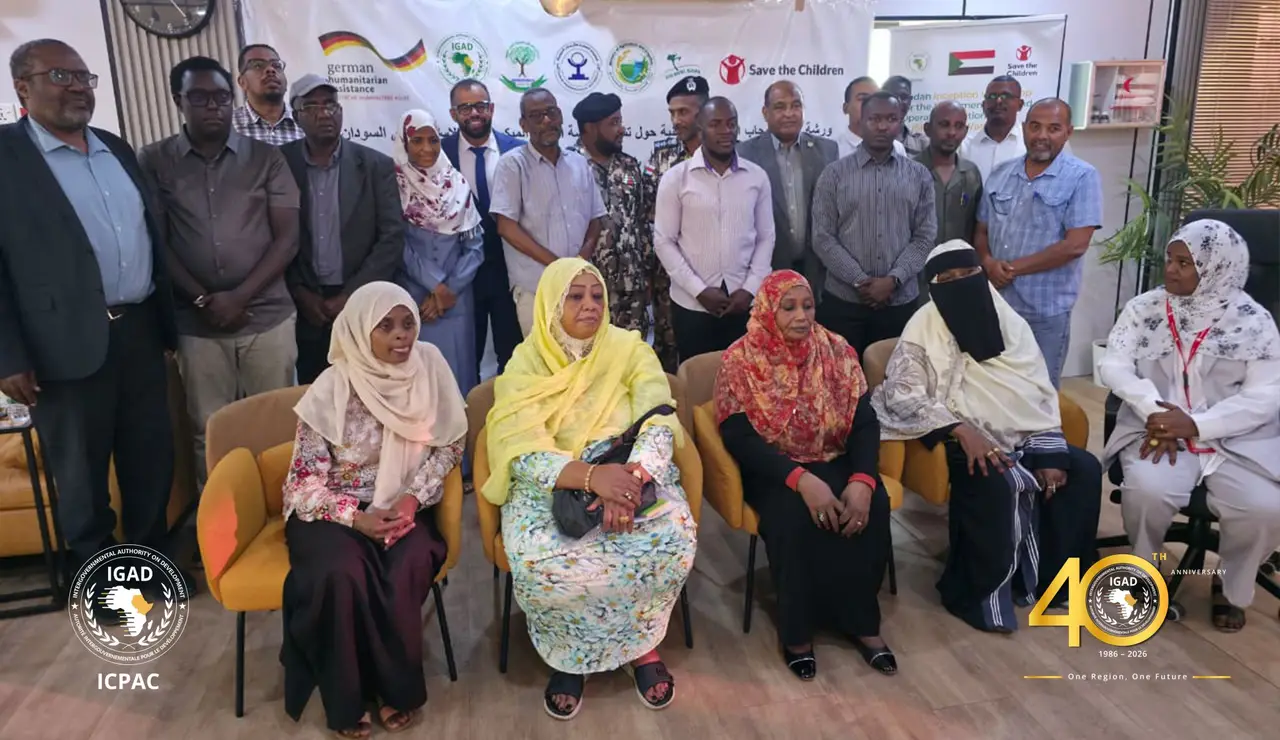
Four days in Port Sudan: putting the Husika platform in national hands
ICPAC, Save the Children International and the Sudan Meteorological Authority ran a hands-on workshop on operating Husika — from forecast workflow to alert generation, delivered over SMS and IVR in Arabic and local languages.
Field story
8 May 2026
5 min read
Karamoja, Uganda
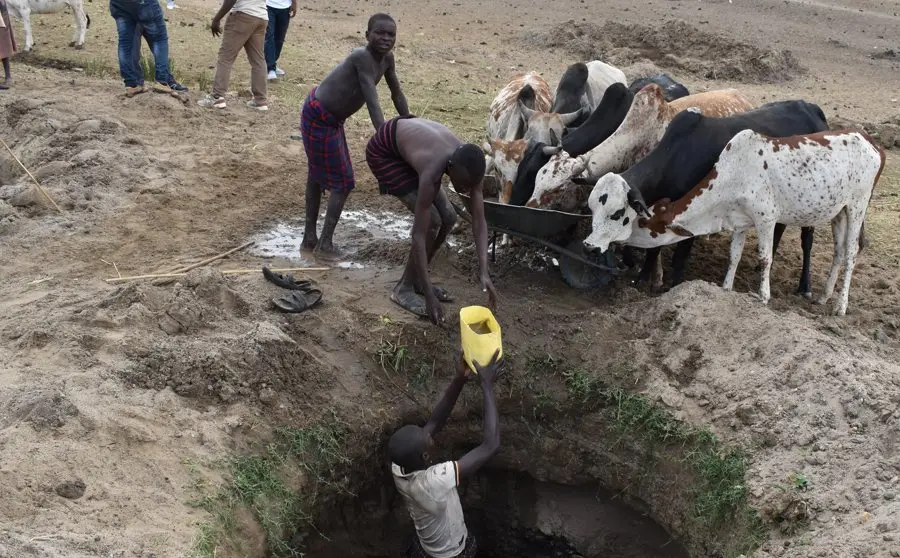
Sand dams and drought-tolerant seed: DRESS-EA in Uganda’s cattle corridor
Across Djibouti, Kenya, Sudan and Uganda, the DRESS-EA project pairs early warning investment with practical water and land technologies. In Karamoja, that means sand dams, mini-irrigation and pasture varieties that survive a failed season.
Ready to transform your early warning system and build community resilience?
Join leading governments, NGOs, and climate organizations using Husika to deliver life-saving information via SMS, mobile apps, and web platforms — all with a real-time feedback loop that continuously improves impact.
NEXT STEP
Start a partnership
Already working with early warning systems?