
Strengthening Cross-Border Animal Health Surveillance & Risk-Based Monitoring of Priority Transboundary Animal Diseases (TADs)
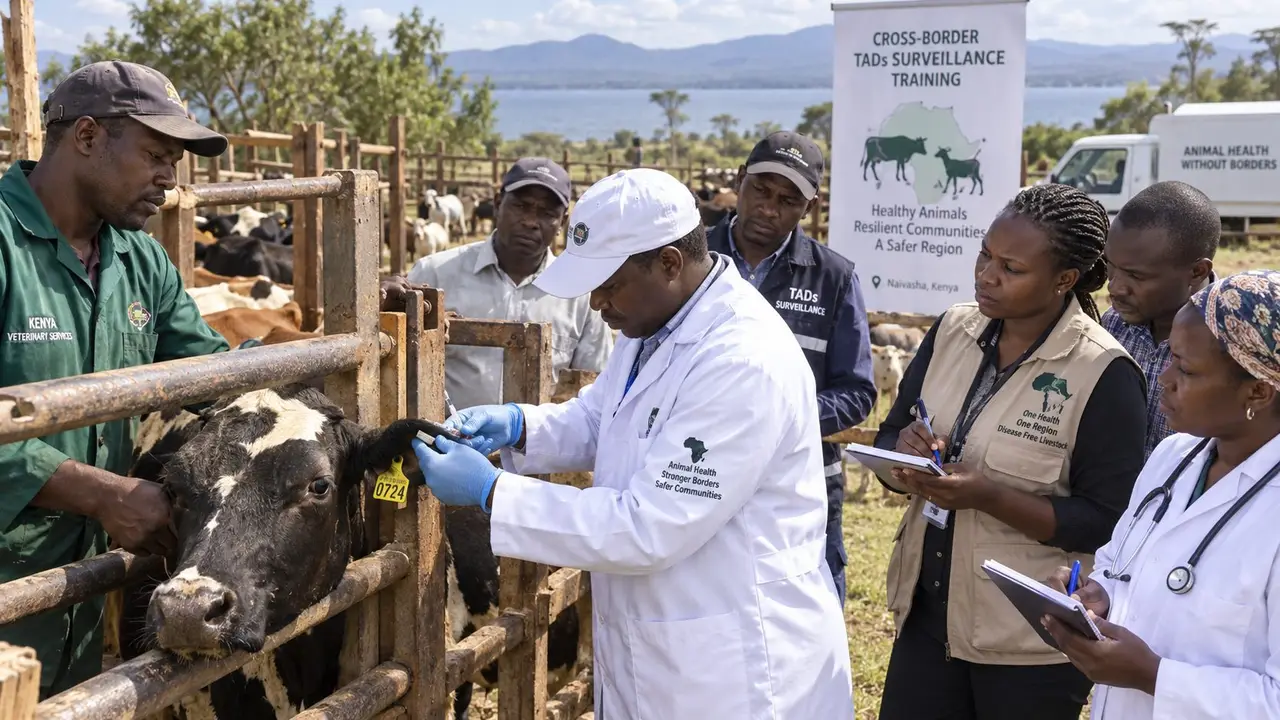
Livestock cross the borders of the Karamoja, Moyale and Mandera Triangle clusters because pasture and water do, and disease travels with them. Over three days in Naivasha, animal health authorities from four countries worked on the surveillance — and the digital plumbing — that would let them see an outbreak coming rather than count it afterwards.
25 February 2026
5 min read
Naivasha, Kenya
Completed · three-day training
4
Countries represented
3
Borderland clusters
3
Days of training
6–12
Months of cluster action plans
The training
The Technical Working Group (TWG) training for IGAD Clusters I, II and III ran from 11 to 13 February 2026 in Naivasha, Kenya, convened with funding from GIZ under the Peaceful and Resilient Borderlands Programme (PRBP).
In attendance were ICPAC, ICPALD, GIZ and technical officers — epidemiology and diagnostics specialists — from Ethiopia, Kenya, Somalia and South Sudan, representing national and sub-national animal health authorities across the three clusters.
Why the borderlands are the risk
The IGAD borderland clusters — Karamoja (Cluster I), Moyale (Cluster II) and the Mandera Triangle (Cluster III) — are predominantly pastoral and agro-pastoral zones where livestock mobility across borders is central to livelihoods, trade, resilience and food security. Seasonal migration in search of pasture and water, coupled with formal and informal livestock trade, sustains millions of households.
Those same dynamics, combined with porous borders, climate variability, recurrent droughts, insecurity, conflict over natural resources, weak infrastructure and limited veterinary service coverage, create high-risk conditions for priority transboundary animal diseases to be introduced and to spread.
Memoranda of Understanding, implementation frameworks and an Animal Health Information Sharing Protocol already exist among the participating countries. Their operationalisation has remained limited — the gaps are in national resource allocation, technical capacity, epidemiological analysis, laboratory diagnostics, digital interoperability and risk-based surveillance.
What was covered
The training aimed to strengthen technical capacity and cross-border animal health early warning systems by equipping TWG members with practical skills across the surveillance chain.
Epidemiological surveillance and risk-based monitoring
Laboratory diagnostics, and the linkages back to epidemiology
Interoperable digital surveillance systems
Translating signed protocols into operational collaboration
Where Husika fits
National digital animal health surveillance systems already generate valuable disease intelligence: the Kenya Animal Bio-Surveillance System (KABS) in Kenya, and the Animal Disease Notification and Investigation System (ADNIS) and the Disease Outbreak and Vaccination Activity Reporting System (DOVAR) in Ethiopia.
At the regional level, Husika provides the multi-hazard early warning and communication platform. What had not been fully operationalised was the join between them — structured integration and interoperability between the national systems and Husika.
That join is the work: bringing KABS, ADNIS and DOVAR into Husika so that a signal detected in one country becomes a warning available across the cluster, rather than a record held in a national database.
What participants committed to
Participants reaffirmed a set of commitments that carry the work past the workshop.
Operationalising MoUs and information sharing protocols
Enhancing risk-based and syndromic surveillance
Integrating KABS, ADNIS and DOVAR into Husika
Strengthening laboratory–epidemiology linkages
Sustaining TWG coordination mechanisms beyond project support
The next six to twelve months
The cluster action plans developed during the training will guide implementation over the next 6–12 months, with emphasis on early warning, outbreak prediction and coordinated cross-border response to priority TADs.
Prediction is the word that matters. Surveillance that only confirms an outbreak is a record-keeping exercise; surveillance wired into a regional early warning platform is what gives a neighbouring county time to act before the herd arrives.
Source
ICPALDAt a glance
Naivasha, Kenya
Completed · three-day training
GIZ
ICPAC
ICPALD
National and sub-national animal health authorities
More case studies
Capacity building
23 September 2026
4 min read
Juba, South Sudan
Training South Sudan’s journalists to carry climate information to the public
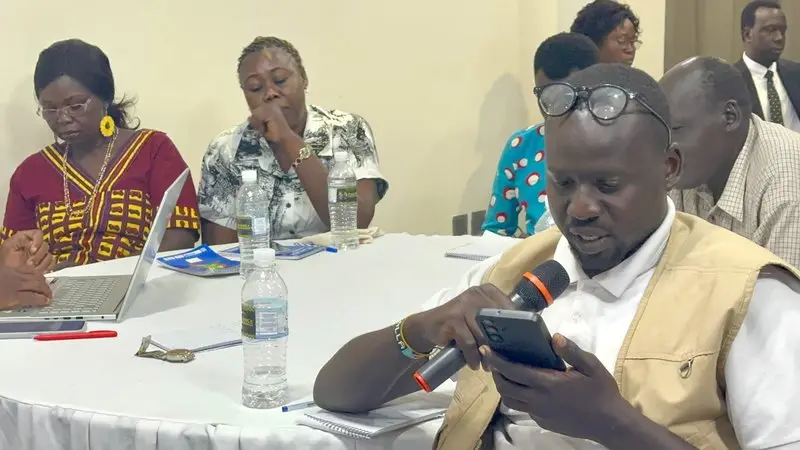
In Juba, ICPAC, WFP, the South Sudan Ministry of Humanitarian Affairs and Disaster Management and the South Sudan Meteorological Service trained journalists to carry climate information to the public without changing the science — the first in a series of Husika trainings for the media across IGAD Member States.
Capacity building
21 July 2026
4 min read
Port Sudan, Sudan
Four days in Port Sudan: putting the Husika platform in national hands
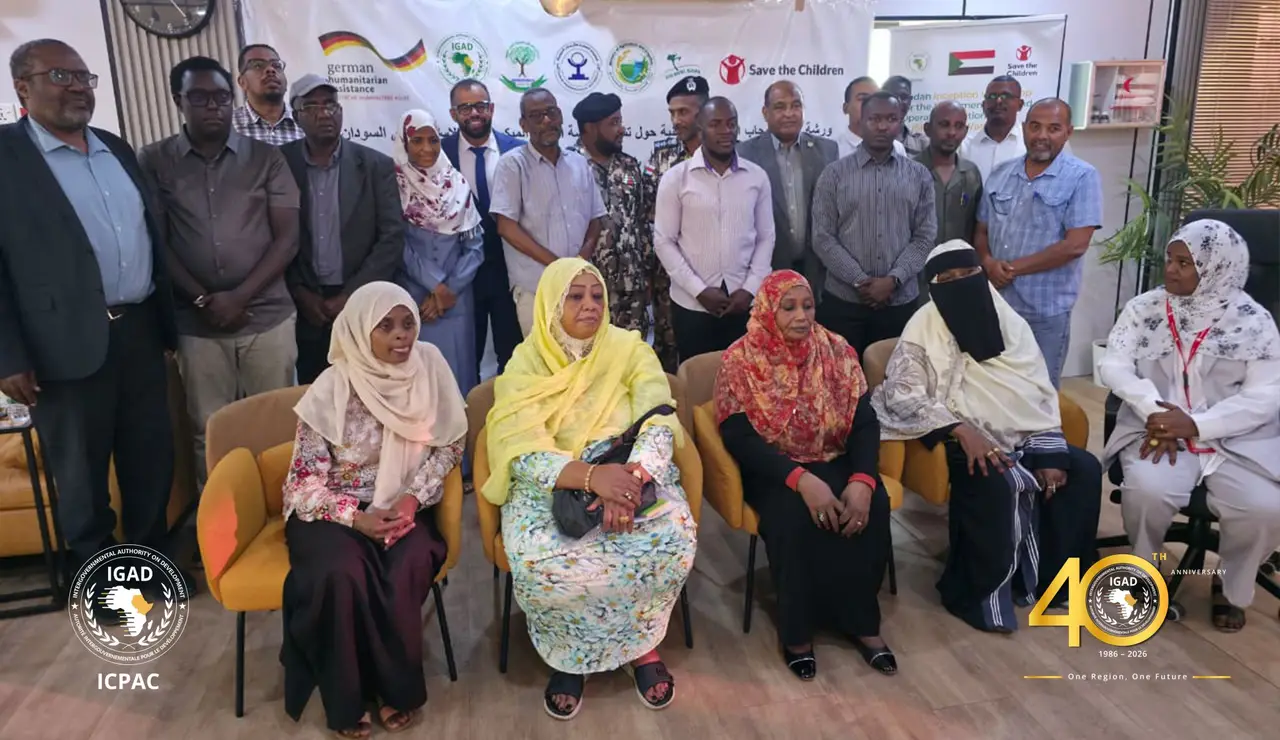
ICPAC, Save the Children International and the Sudan Meteorological Authority ran a hands-on workshop on operating Husika — from forecast workflow to alert generation, delivered over SMS and IVR in Arabic and local languages.
Programme
12 June 2026
6 min read
South Sudan
SUSTAIN: standing up multi-hazard early warning in South Sudan
Communities and productive sectors in South Sudan face unprecedented climate impacts, yet the country lacks adequate capacity to monitor, predict and communicate them. SUSTAIN rebuilds that chain from the weather station upward — with Husika as the last mile.
Ready to transform your early warning system and build community resilience?
Join leading governments, NGOs, and climate organizations using Husika to deliver life-saving information via SMS, mobile apps, and web platforms — all with a real-time feedback loop that continuously improves impact.
NEXT STEP
Start a partnership
Already working with early warning systems?